
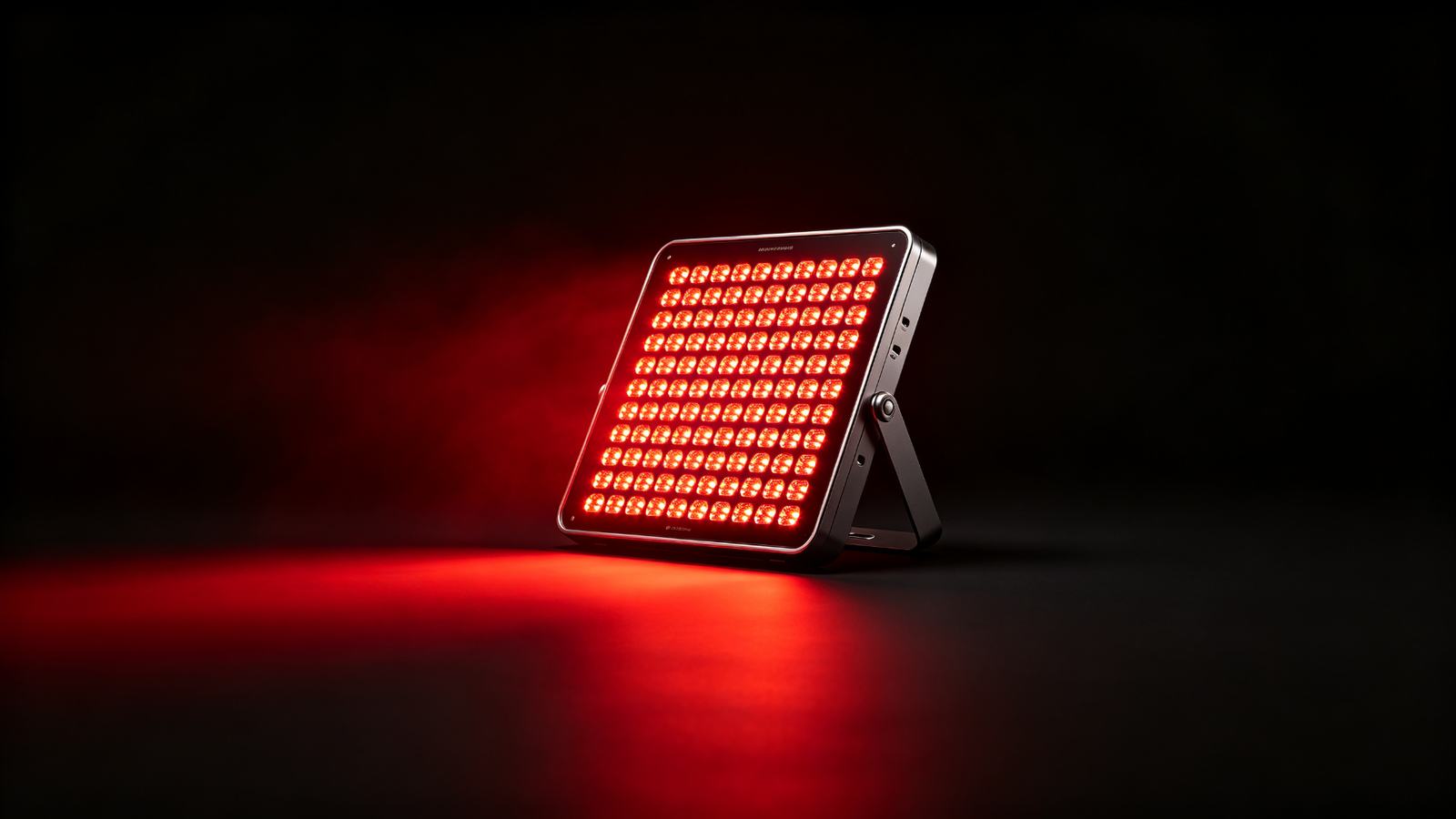
The red-light wellness market continues to expand, driving more and more brands, distributors, and wellness operators to build their own light-therapy product lines through OEM cooperation.
This product category carries distinct characteristics: it is subject to regulatory oversight across multiple regions, technical specifications are prone to overstatement, and performance gaps between hand-built samples and mass-produced units can be substantial. Many buyers encounter costly setbacks in real-world projects: non-compliant marketing triggering regulatory risks, inflated specifications leading to post-launch product failures, confusing trading companies with genuine manufacturers, mass-production defects despite perfect prototypes, intellectual-property and tooling ownership disputes, and ambiguous after-sales terms resulting in heavy financial losses.
Most losses stem not from technical barriers, but from insufficient due diligence, unchecked critical links, and verbal-only commercial agreements. This guide focuses on high-frequency risks throughout the OEM workflow. It outlines typical sourcing mistakes and delivers actionable checklists and evaluation criteria to help buyers identify hidden hazards and make robust OEM partnership decisions.
Cooperation Models
OEM / ODM / Private-Label: Know What You're Buying First
Many suppliers use OEM, ODM and private-label interchangeably. Buyers fail to clarify rights and obligations during negotiations, which later leads to disputes — such as paying for custom development without owning the design or tooling, or identical products being sold to competing brands.
| Model | Design ownership | Tooling ownership | Differentiation |
|---|---|---|---|
|
OEM You provide specs, factory manufactures |
Buyer | Negotiated; generally belongs to the buyer if the buyer pays for tooling | Highest Custom specs & buyer-owned IP |
|
ODM Factory designs, you re-brand |
Factory | Factory | Medium Can be improved by purchasing exclusivity |
|
Private-label Factory's existing product, your logo |
Factory | Factory | Low Identical goods sold to multiple buyers |
- When you provide product specifications, document ownership of tooling, molds, firmware and test fixtures in writing. Define asset disposition if you change suppliers.
- For ODM projects, confirm whether the design is offered on an exclusive basis. Exclusivity carries extra costs; verbal promises are not legally binding and must be formalized in contracts.
- Private-label suits market validation rather than long-term brand strategy — it cannot deliver specification-level differentiation.
Compliance
Your Marketing Claims Determine Your Regulatory Path
General wellness / comfort positioning: a lighter regulatory path
United States · FDA
- General wellness positioning: claims limited to subjective comfort and general well-being, without disease-related or therapeutic statements
- FDA establishment registration and device listing are still required
- 510(k) pre-market notification is not mandatory
European Union · CE
- General product-safety requirements: EMC / LVD / RoHS
- No medical-device registration required
- CE self-declaration covers ordinary electronics compliance
The scanner is a due-diligence aid, not legal advice — final claims must be verified for each target market.
- Confirm the legal certificate holder: the factory itself, a parent entity, or a shell company?
- Check the covered manufacturing site and product scope against your exact model and positioning.
- Cross-check via official databases (FDA 510(k), EUDAMED, Notified-Body registers). Do not rely on PDF copies alone.
Claiming "full certification" while refusing independent official verification.
Spec Inflation
How Much Can You Trust the Numbers on a Spec Sheet?
Irradiance and wavelength are the two most-compared performance indicators — and the most frequently exaggerated in the industry. Samples perform acceptably, yet mass-produced units suffer wavelength shift and power decay, triggering large-scale returns after launch. Drag the slider to see how much distance affects irradiance.
Irradiance only means something with a test distance attached. Realistic values for mainstream commercial devices range from about 100–150 mW/cm² at 6 inches (15 cm). If a supplier quotes 400–500+ mW/cm² without specifying test method or distance, treat it as a red flag. This chart is a schematic illustration of distance-based attenuation.
Wavelength consistency
The risk is not band selection, but the deviation between labelled and actual emission: an LED marketed as 660 nm that outputs at a different wavelength delivers entirely different performance. Always request spectral measurement data.
LED quality & binning
Reputable factories sort chips by actual wavelength and brightness (binning) before assembly to guarantee unit-to-unit consistency. Ask suppliers for:
- Full LED brand and part numbers in the BOM, not just verbal descriptions
- Batch-specific LED binning data
- In-house or third-party spectroradiometer test reports
Driver & thermal design
LED driver performance and thermal architecture determine stability during single-session operation and long-term service life. Poor drivers cause flicker and power degradation; inadequate thermal design leads to significant output drop shortly after power-on. Both are major drivers of product returns. Require driver documentation and thermal test data.
Three questions to ask
For any spec sheet, clarify these three points first:
- At what distance was it measured?
- Is there a third-party test report?
- Which spectrometer was used?
Supply-Chain Identity
Are You Dealing With a Real Factory or a Trading Company?
Buyers assume they are working directly with a factory while actually engaging a trading company with fully outsourced production. You lose traceability and quality control, becoming vulnerable to third-party-driven quality and lead-time fluctuations.
Real factory
- Own production lines and equipment — QC stations and burn-in racks in the same facility
- Provides BOM, binning data and batch test records
- Accepts on-site audits and unscheduled live tours
- Traceable raw materials with batch serialization
Trading company
- Production fully outsourced, no original test records available
- Vague about BOM and chip part numbers
- Refuses site visits and third-party audits, citing "confidentiality"
- Quality and lead times depend on an upstream factory
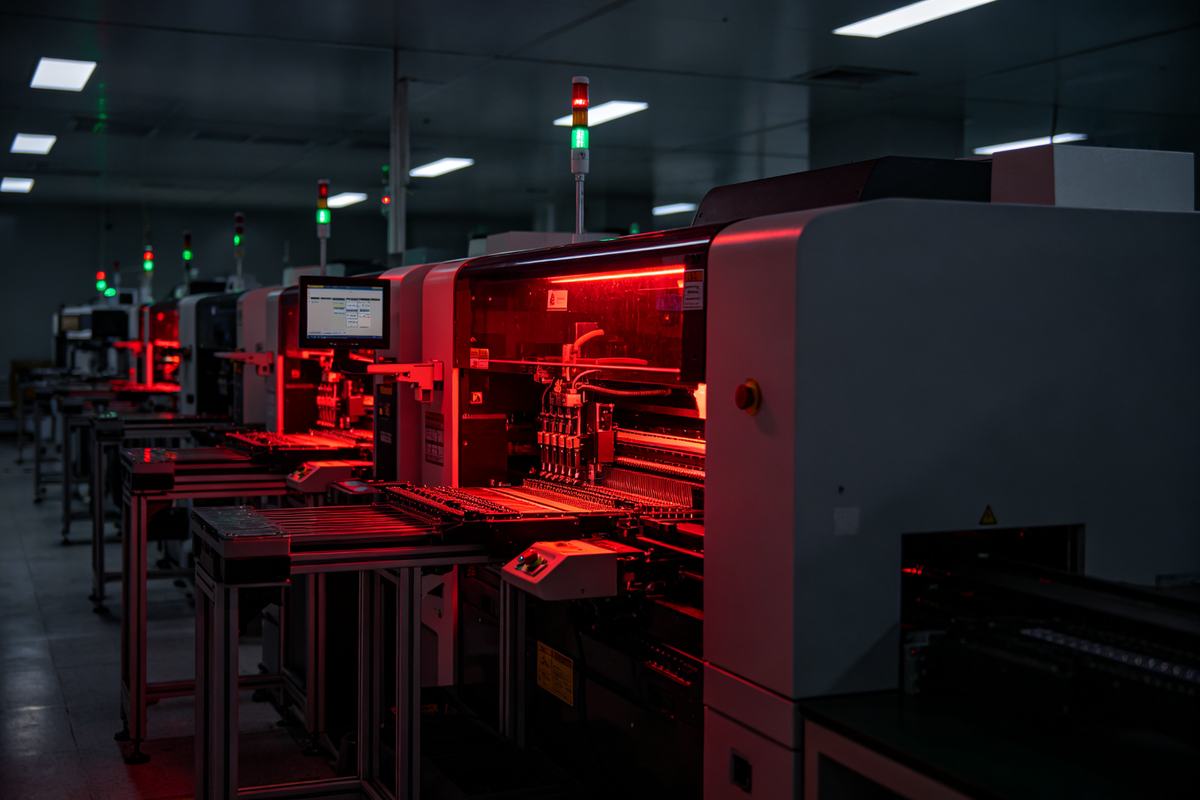
Request unscheduled live virtual tours covering SMT assembly lines, QC stations and burn-in racks; reject only pre-recorded promotional footage.
Inspect QC workshops and original test records rather than reviewing only displayed certification documents.
Request a complete BOM including LED part numbers and binning data — most trading firms cannot provide this.
For medium-to-large orders, commission third-party on-site audits (SGS, TÜV, Bureau Veritas): genuine manufacturers generally accept; intermediaries tend to offer excuses.
Conduct in-person factory visits when order size justifies it. Deliberate discouragement or refusal of site visits is a serious warning signal.
Mass-Production Consistency
A Perfect Sample Does Not Mean Reliable Mass Production
Evaluating manufacturing capability exclusively on hand-built prototypes and skipping pilot production: prototypes perform perfectly, yet mass-production batches suffer widespread non-conformity. A prototype only proves sample-level performance — real capability is proven through complete QC workflows and pilot-batch results.
Engineering-sample validation
Verify spectrum, irradiance, safety performance and thermal behaviour.
Pilot production
Run a small batch through the full production and inspection workflow on regular production lines.
Written QC protocol
Define inspection points, sampling rates and acceptance criteria.
Pre-shipment inspection
Perform for every batch — buyer-led or third-party.
| QC element | Value for buyers |
|---|---|
| Incoming material inspection | Component verification before assembly, traceable sourcing. |
| LED binning | Consistent performance across mass-produced units, not limited to prototypes. |
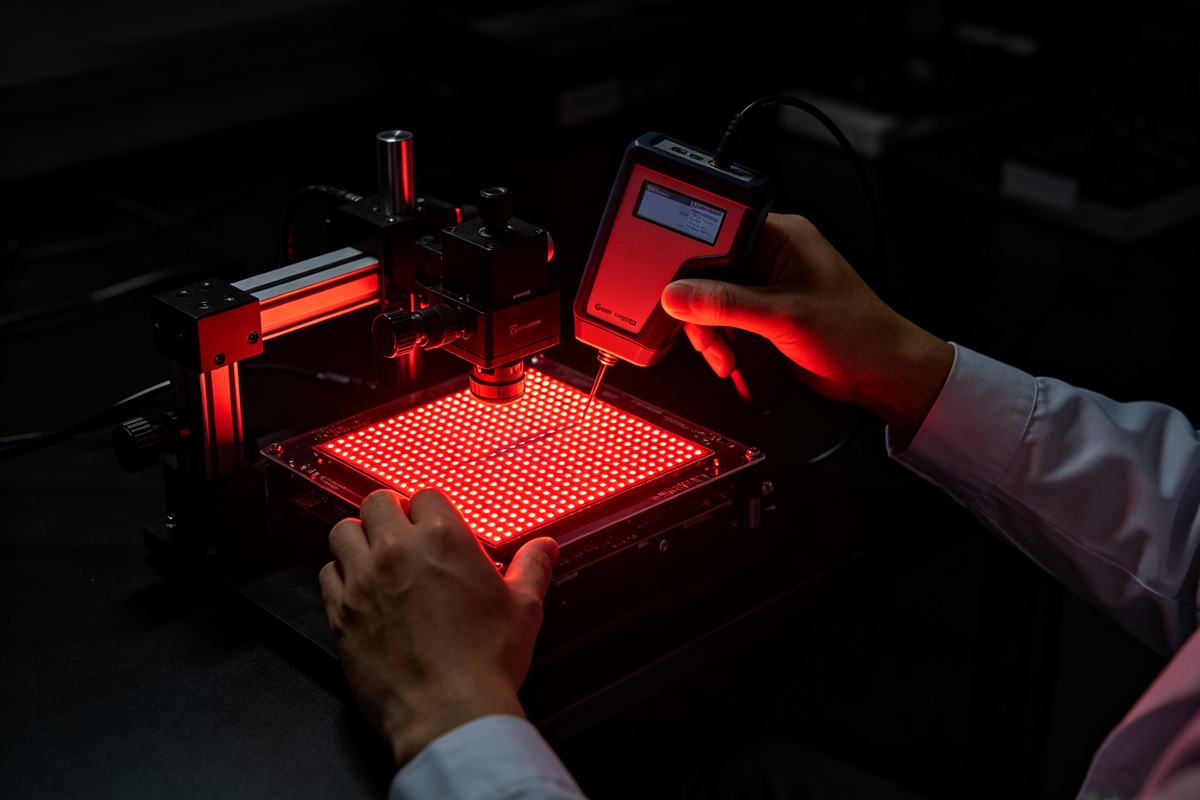
| Spectroradiometer testing | Empirical wavelength and irradiance measurement instead of theoretical assumptions. |
| Burn-in / aging test | Continuous operation for 8–72 hours (standard for reputable factories) to detect early-life failures before shipment. |
| IPQC / OQC checkpoints | In-process and outgoing quality inspection with archived records. |
| Batch serialization & traceability | Trace returned defective units back to production batches and component lots. |
Commercial Terms
The Hidden Costs You Might Overlook
Comparing unit price alone and being attracted by abnormally low quotations, which often come with downgraded components or skipped QC steps. Offers far below market levels almost always imply quality compromises.
MOQ
Distinguish pilot-run MOQ from mass-volume MOQ, and confirm volume-based price breaks. They are different numbers.
Tooling costs
Tooling and fixture expenses, amortisation rules and ownership status must all be documented in writing.
Lead time
Sample lead time and mass-production lead time are different; reserve extra buffer for certification procedures.
Payment terms
Milestone-based staged payments are industry standard: deposit upon order confirmation, balance payable after inspection.
Final price is determined by LED grade, driver architecture, housing material, thermal solution, certification scope, packaging and your QC requirements.
Contract Risks
IP, Warranty and After-Sales: Don't Rely on Verbal Promises
No NDA signed prior to sharing specifications, sketches or business plans. Tooling/firmware ownership, ODM exclusivity and RMA responsibilities agreed verbally only — leaving no legal recourse during conflicts. Four core items must be settled before contract signing:
Sign an NDA first
Sign a confidentiality agreement before disclosing specifications, drawings or commercial strategies.
IP ownership
Clarify ownership of tooling, molds, firmware, BOM and test fixtures. Define asset handling upon partnership termination. If you fund tooling development, the contract must state that you hold ownership.
ODM exclusivity
Confirm whether factory-originated designs are exclusively supplied to you. Reject oral guarantees.
Warranty & after-sales
Agree on warranty duration, the full RMA process and cost allocation for field-returned defective units. After-sales accountability is part of product quality; refusal to formalise these points is itself a risk indicator.
Pre-Order Checklist
Ten Critical Questions to Ask Before Signing an OEM Agreement
Bring this checklist to the negotiation table. Mark confirmed items, then send the unresolved ones to your supplier.
-
Are you the actual manufacturer or a trading company?
If you are a trader, identify the real factory and confirm whether direct third-party audit of that facility is permitted. -
Which certifications do you hold?
Specify issuing bodies, covered production sites and product scopes. Are official-database verifications supported? -
Provide a complete BOM including LED part numbers and batch binning data.
Sales spec sheets cannot replace formal BOM documents. -
What is your full irradiance test protocol and measurement distance?
Third-party test reports are preferred. -
Walk through your complete QC checkpoints, burn-in procedure and sampling rules.
And provide test records from a recent production batch. -
Do you accept third-party on-site audits by SGS, TÜV or Bureau Veritas?
Genuine factories usually accept; intermediaries tend to make excuses. -
Provide written documentation on pilot-run MOQ, mass-production MOQ, sample and mass-production lead times, and payment milestones.
All four are required. -
Who owns tooling, molds and firmware? What happens upon partnership termination?
IP and exit terms are commercial terms. -
Who is responsible for target-market certification, and who holds formal certificate ownership?
The certificate holder is the one holding the leverage. -
State your warranty term and the complete RMA (return-merchandise-authorisation) workflow.
After-sales is part of product quality.
60-Second Check
How Far Along Is Your Supplier Due Diligence?
Supplier risk self-check
Answer 6 questions to gauge your risk level before an OEM engagement.
1. Have you signed an NDA before sharing specifications and drawings?
2. Did the supplier provide third-party irradiance test reports and the test distance?
3. Have you required a pilot run, rather than accepting samples only?
4. Are payments milestone-based, rather than 100% in advance?
5. Does the supplier accept third-party on-site audits (SGS / TÜV / BV)?
6. Are tooling/firmware ownership and after-sales RMA written into the contract?
The Right Partner
The Ideal Supplier Is Not the One With the Lowest Price
For distributors, wellness brands and multinational enterprises looking to tap into the light therapy sector, selecting a qualified red light therapy device manufacturer is a pivotal decision. A trustworthy manufacturing partner needs to possess the following core strengths:
About SAIDI
SAIDI specializes in the R&D and manufacturing of red light therapy devices, offering OEM and ODM solutions to wellness brands and distributors worldwide. With strong manufacturing capabilities, rigorous quality control, and flexible customization solutions, we help partners develop reliable light therapy products for global markets.